Hello, lovely people!
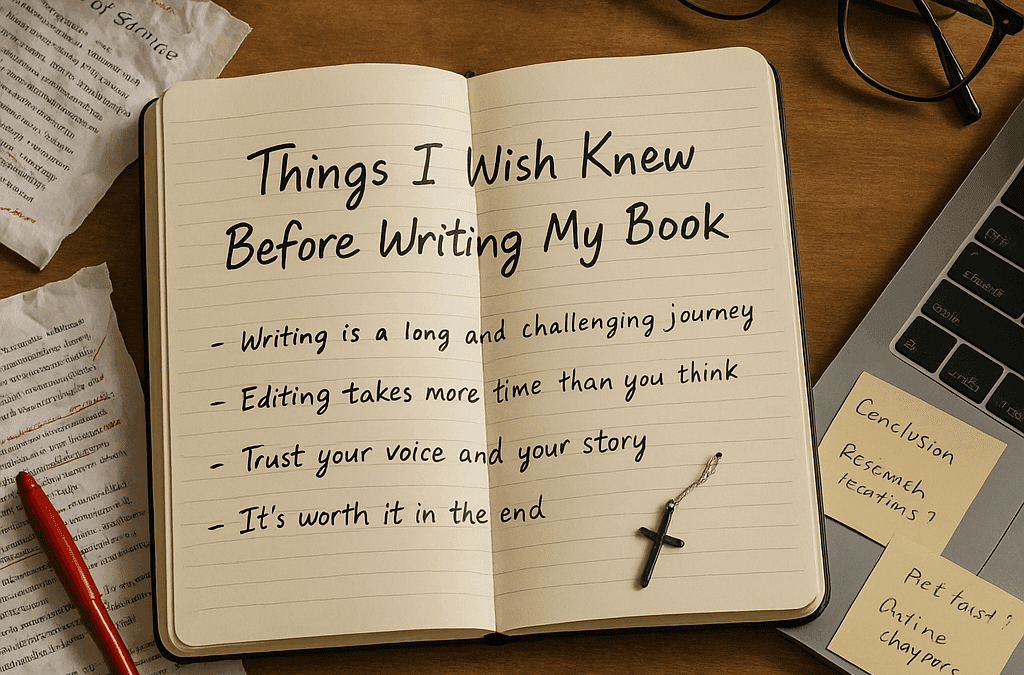
If you’ve been following my journey, you’ll know that writing Unequally Yoked was a deeply personal and powerful experience for me. But while writing the book was one thing, publishing it was a whole other story. I was so focused on pouring my heart into the manuscript that I didn’t fully prepare for what came next. And let me tell you—there’s a lot that comes next! So today, I want to share a few things I wish someone had told me before I published my first book. Whether you’re just starting to write or are already editing your manuscript, I hope this helps you avoid some of the bumps I hit along the way.
Publishing is a Business—Not Just a Creative Process
This was probably my biggest eye-opener. As writers, we’re driven by passion, emotion, and purpose. But once your manuscript is done, you step into the world of publishing—and that world runs like a business.
From cover design to pricing, marketing, and distribution—everything is about how your book fits into a market. And while that doesn’t take away from the beauty of your message, it means you have to start thinking strategically. Your book is your product, and that product needs to be packaged and presented well to reach the right audience.
Don’t Rush—Do Your Research on Publishers
I made the mistake of going to Google, typing in “publishing companies,” and just contacting whoever popped up first. One company responded, and in my excitement, I ran with it.
Looking back, I wish I had slowed down and done more research. Ask questions. Read reviews. Compare packages. And most importantly, understand what you’re signing up for. Just because a company is quick to respond doesn’t mean they’re the best fit for your vision.
Know the Different Types of Publishing
There’s more than one way to publish a book:
– Traditional Publishing: The publisher pays you, but you need a literary agent and a strong proposal. It’s highly competitive.
– Hybrid Publishing : You pay part of the cost, and the publisher handles services like editing and distribution.
– Self-Publishing : You do (or outsource) everything yourself, from editing to marketing.
Each option has its pros and cons. I didn’t understand all this at the beginning, and it would have saved me a lot of confusion if I had.
Editing Comes in Stages—And It Matters
When I first got a critique on my book, I thought that was it—done and dusted! But editing isn’t a one-time thing. There are different types:
– Developmental editing looks at the big picture—structure, pacing, plot holes.
– Copyediting checks grammar, clarity, and consistency.
– Proofreading catches those final typos.
A good edit can make or break your book, and yes—it can be expensive. But it’s worth every penny to make sure your message is clear, polished, and powerful.
The publishers I initially chose were, quite frankly, not very good at their trade, and I ended up doing most of the editing myself. At the time, I knew absolutely nothing about editing. Along the way, I had to teach myself about fonts, spacing, colour palettes, book sizing—you name it. After reading through the manuscript for what felt like the hundredth time and pointing out numerous errors to the publishers, I finally submitted what I believed to be the final draft. I hoped they would uphold their end of the bargain and deliver what they had promised.
Instead, without sending me a printed proof, they went ahead and published the book on Amazon. In my excitement, I shared the link with all my friends. A few days later, one of my colleagues brought her copy in for me to sign—and as I flipped through the pages, my heart sank. Error after error jumped out at me. That’s when I realized, to my horror, that no final quality check had been done.
I immediately contacted the publishers and requested that the book be unpublished from Amazon. At that point, I had completely lost confidence in them. I began searching for a professional editor, but the quotes I received were far beyond what I could afford at the time.
In the end, I turned to an editing software called ProWritingAid, and honestly, it saved me. It gave me the tools I needed to refine my work and restore a sense of control over the quality of my book.
Choosing the right publisher is absolutely crucial—I truly cannot stress this enough. It can make or break your entire publishing experience. In my next blog, I’ll be sharing even more of the things I wish I had known before starting this journey. I hope it helps you avoid some of the pitfalls I encountered.
See you soon!